Some links on this page are Amazon affiliate links. We may earn a small commission from qualifying purchases.

Book Suggestions

Here are book recommendations that helped me think critically, ask better questions, and find perspective during and after my faith transition out of Mormonism. Of course I would never claim that a believing member of the church couldn't also find value in some of these books as well.

This page is specifically for printed books. Online resources can be found here.


The First Book of Napoleon, The Tyrant of the Earth: Refined Edition

The First Book of Napoleon: The Tyrant of the Earth is one of the more unusual works to emerge from the Napoleonic era. Written in the style and language of the King James Bible, it retells the rise of Napoleon Bonaparte and the upheavals of Revolutionary and Napoleonic Europe as though they were sacred history. This book exists in the same literary sphere that allowed for the creation and reception of the Book of Mormon


The Book of Mormon: Original 1830 Edition)

This is the original text of the Book of Mormon, without chapters or footnotes. It helped me see the book more clearly as a 19th-century novel, not scripture. The formatting reflects how it was first published in 1830, before later editorial changes.

The Destruction of Jerusalem: An Absolute and Irresistible Proof of the Divine Origin of Christianity

Originally published in 1805, Holford portrays the fall of Jerusalem by the hand of the Romans as the ultimate fulfillment of Christ’s prophecies, framing it as historical evidence for divine truth. This work gained traction in early America and heavily influenced Christian thought in Joseph Smith’s time. For readers exploring Mormon origins, Holford’s book highlights a key theological and literary pattern that helped shape early 19th-century American scripture writing.

The American Revolution: Written in the Style of Ancient History: Volume I

Originally published in 1796, The American Revolution: Written in the Style of Ancient History, Volume I by Richard Snowden transforms the events of the American Revolution into a sweeping biblical-style narrative. Covering approximately 1773–1777, this volume follows the movement from imperial taxation and colonial resistance into open war and the early campaigns of American independence. Featured events include the Tea crisis, the First Continental Congress, Lexington and Concord, Bunker Hill, Washington’s early campaigns, the struggle for New York and New Jersey, the occupation of Philadelphia, and the northern campaigns.

The Earliest Criticisms of The Book of Mormon

Soon after its publication in 1830, newspapers, ministers, pamphleteers, former believers, and public critics began responding to it. Some viewed it as a religious fraud, others as a social danger, while many simply saw it as one of the most unusual religious movements of early America. The purpose of this volume is to preserve and present the historical record of how the Book of Mormon was received during its earliest decades. These texts capture the language, controversies, fears, and debates surrounding the rise of Mormonism in real time. Some are measured critiques. Others are openly hostile. Together, they provide a direct window into the public reaction that followed the emergence of one of America’s most controversial religious texts.

View of the Hebrews

An early-19th-century religious and historical work that argues the Indigenous peoples of the Americas are descendants of the lost ten tribes of Israel. Drawing on biblical prophecy, classical sources, and reports of Native traditions, Ethan Smith attempts to show parallels in customs, language fragments, religious rites, and social structures that he believed pointed to a Hebrew origin.
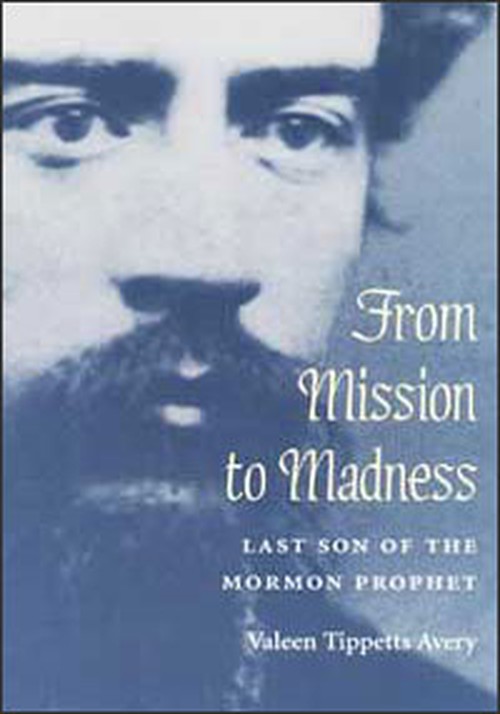
From Mission to Madness: LAST SON OF THE MORMON PROPHET

This book examines the life of David Hyrum Smith, the youngest son of Joseph and Emma Smith. David grew up in the shadow of his father’s legacy, joining the Reorganized Church and serving as a missionary, writer, and artist. Using David’s letters, poems, and other records, Avery traces David's gradual mental decline and the decades he spent institutionalized. The book offers a clear look at the tension between faith, family loyalty, and the personal struggles of a man born into a prophetic family. (Note: I have the exact copy pictured here. The Amazon page says there is no picture, but when I ordered it, it arrived with a cover matching the image you see here)
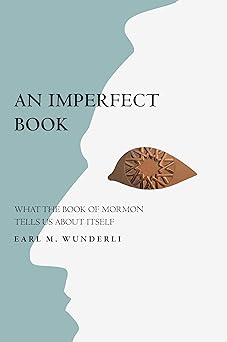
An Imperfect Book: What the Book of Mormon Tells Us about Itself

Earl M. Wunderli is a critical analysis of the Book of Mormon that focuses on its internal inconsistencies, patterns, and language. Rather than depending on external sources like archaeology or tradition, Wunderli examines the text itself to determine whether it holds up to its own claims. He approaches the book as a literary work and evaluates it through reason and close reading, offering a skeptical yet respectful critique that challenges the idea of its divine origin.
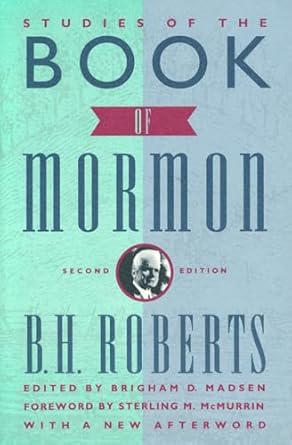
Studies of the Book of Mormon

Written by B. H. Roberts, a respected LDS general authority, this work presents internal critiques of the Book of Mormon. He raises important historical and literary problems, shared originally with other church leaders. It’s a good-faith, insider analysis that still hits hard.
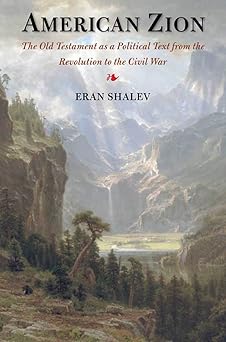
American Zion

Shalev shows how early Americans used the Old Testament to shape national identity. Chapter three focuses on the Book of Mormon, placing it into a genre he calls “pseudobiblicia.” This helped me to understand the book as part of a broader cultural trend, not ancient scripture.
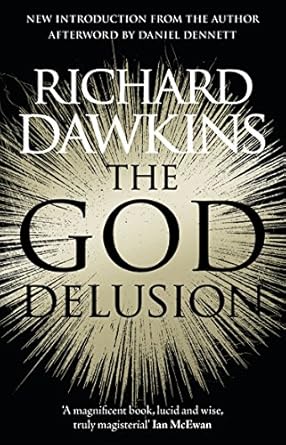
The God Delusion

Dawkins argues that religious belief is not only unsupported by evidence, but often harmful. He breaks down common arguments for God and defends science and reason as better tools for understanding the universe. While not directly related to Mormonism, this book is incredibly popular amongst Atheists and promotes being confident in a godless belief system.

The History of Joseph Smith by His Mother

Lucy Mack Smith’s 1853 account of Joseph Smith’s early life, family struggles, and spiritual experiences. Unpolished and personal, it includes early versions of key events like the First Vision and Moroni’s visits, as it was originally pulished. I recommend the complete 1853 edition for its raw insight into Mormonism’s origins.

No Man Knows My History: The Life of Joseph Smith

Brodie offers a critical yet balanced look at Smith’s charisma, ambition, and the controversies surrounding him, shedding light on the origins of the Church of Jesus Christ of Latter-day Saints. Celebrated for its scholarly depth and engaging style, the book remains a landmark in American religious history.

Early Mormonism and the Magic World View

D. Michael Quinn uncovers the influence of folk magic in early 19th-century New England and its role in shaping Mormon founder Joseph Smith’s worldview. Quinn reveals a world of supernatural beliefs and practices, showing how Smith's family and early Mormons interpreted such elements as part of their spiritual experience.

This deeply researched book explores occult traditions tied to early Mormonism, including treasure digging, astrology, and the use of protective talismans, offering valuable context for the origins of the faith.
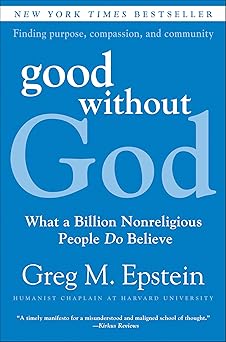
Good Without God: What a Billion Nonreligious People Do Believe

Greg Epstein offers a thoughtful and positive response to New Atheist critiques of religion. As the Humanist chaplain at Harvard, Epstein presents a worldview for nonbelievers rooted in tolerance, community, and morality, without relying on a higher power. Challenging books like God Is Not Great and The God Delusion, Epstein advocates for Humanism as a meaningful, ethical alternative to religion, highlighting what nonbelievers do believe rather than what they reject.

An Imperfect Book: What the Book of Mormon Tells Us about Itself

Earl M. Wunderli is a critical analysis of the Book of Mormon that focuses on its internal inconsistencies, patterns, and language. Rather than depending on external sources like archaeology or tradition, Wunderli examines the text itself to determine whether it holds up to its own claims. He approaches the book as a literary work and evaluates it through reason and close reading, offering a skeptical yet respectful critique that challenges the idea of its divine origin.
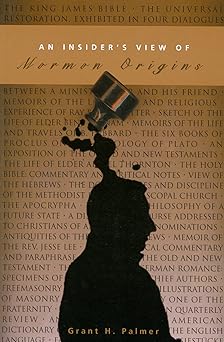
An Insider's View of Mormon Origins (Volume 1)

Grant H. Palmer offers a careful, research-based look at the beginnings of the LDS Church. Drawing from three decades of study, Palmer examines early church history, Joseph Smith’s prophetic claims, and the development of core doctrines. As a former LDS educator, he presents his findings in a clear, accessible way for readers (especially Latter-day Saints) who may be unfamiliar with how much early narratives have shifted over time. The book argues that many sacred events, originally understood as spiritual experiences, have since been reframed as literal history.


This page is a work in progress. I’ll keep adding more titles as I come across them.

Feel free to reach out with more suggestions using the contact form on the drop-down menu of this site.

– Mason

Comments

Popular posts from this blog

Mormon Blood and the Esther Cohen-Tizer-Epstein Letter

With the recent release of nearly 3.5 million pages of the Epstein files, there have been several connections made regarding Jeffery Epstein paying tuition for several students at BYU. The most notable of which is presented in what is known as the Esther Cohen-Tizer-Epstien Letter.    Some are questioning the authenticity of the letter, but some clues seem to point us to a woman named   Esther Cohen .  Lets look at a few connections. Note that these connections are not an attempt at making any accusations and are simply connections made through publicly available information. I will be updating this page as I find more information. EFTA00129111  Reference to the Seven Bowls School of Nutrition From Esther's website: alchemyofnourishment.com (Update March 04, 2026: The site seems to have been taken down) She began studying nutrition as a teenager: Which also seems to align with her site. Alchemy of Nourishment Along with the claim of residing in Colorado Alc...

Candon Dahle to Marry After Child Abuse Conviction

Former BYU baseball player Candon Dahle is expected to marry this week, less than a year after receiving a plea deal that allowed him to avoid sex offender registration despite admitting guilt to two felony counts involving the abuse of a child. News of the wedding has reignited criticism online, where many argue Dahle's return to ordinary life has come far too quickly in light of the allegations against him.  The topic was recently discussed on Instagram by  @justinthenickofcrime View this post on Instagram A post shared by Justin (@justinthenickofcrime) Dahle first made headlines in February 2025 when he was charged in Fremont County, Idaho, with felony lewd conduct with a child under the age of 16. According to the probable cause affidavit summarized by East Idaho News , prosecutors alleged Dahle sexually abused an 11-year-old girl and covered her mouth during one of the assaults. Authorities also filed a separate juvenile case in neighboring Bing...

The "Mormon" Trademark is About to Expire

 The request for Mormon Stories to rebrand has spread quickly through Mormon spaces. Followers learned that om November 14th 2025, the LDS Church had reached out with claims that the podcast was infringing on the “Mormon” trademark. The demand leaned on the legal idea that the Church owns the word.  The request was shared on social media by @mormstories, but those posts seem to have been removed. Fortunately, copies of the email were  shared on reddit. But there is a significant detail sitting behind this entire dispute. The Church will have to renew the "Mormon" trademark in the 2026 to 2027 window.  Source: USPTO database When that time comes, they must prove that they still use the word “Mormon” in active commerce. USPTO rules are clear on this point. A trademark only survives if the owner can show that it is still printed on actual goods or services that are still being sold or distributed. The official guidelines spell it out at uspto.gov under “ Keeping your r...

A Bit of Original Evidence

In May 1900, Theodore A. Schroeder published an article titled A Bit of Original Evidence  in issue no. 9 of Lucifer’s Lantern . [1] The piece reproduces part of an 1887 letter apparently written by Mississippi attorney E. E. Baldwin to W. O. Norrell of Salt Lake City. [1] [2] Baldwin attributed the story to his uncle by marriage, James G. Horton, who allegedly said that Joseph Smith and several companions staged the discovery of the Book of Mormon plates as a practical joke and used a Bible-shaped box packed with sand. [1] Other accounts conflict with the claim that the box contained only sand. William Smith stated that members of the Smith family felt the plates through the cloth covering them and could distinguish their individual leaves. Martin Harris reported that Alvah Beman heard a metallic sound when the plates were placed inside the box. Those who said they lifted the covered object also estimated that it weighed between forty and sixty pounds, which would be difficult ...

The Church is Changing the Sunday Schedule... Again

On September 6, 2026, Latter-day Saints will arrive at church to find the second hour rearranged. Sacrament meeting will remain no longer than 60 minutes. Adults and youth will then attend 25 minutes of Sunday School every week, followed by 25 minutes of Relief Society, elders quorum, Young Women, or Aaronic Priesthood quorum instruction. Primary will meet for 55 minutes. The alternating schedule introduced with two-hour church in 2019 will be gone.¹ The First Presidency's March announcement put the change plainly: In the new schedule, sacrament meeting will continue to be no longer than 60 minutes. After a 5‑minute transition, youth and adults will attend a 25‑minute Sunday School class each week. Following another 5‑minute transition, they will attend a 25‑minute priesthood quorum, Relief Society, or Young Women meeting. Primary will continue to meet weekly and will now last 55 minutes.¹ The schedule is a modest administrative revision. The institution capable of making it, thoug...

What Would It Take to Show Christianity Is False?

If Christianity's central claims are correct, then the universe has a creator who became incarnate in Jesus of Nazareth, died for the sins of the world, rose bodily from the dead, and continues to offer eternal life to those who trust in him. If these claims are true, they deserve not merely admiration but allegiance. They would represent the defining events of human history. If they are false, however, the implications are equally profound. Christianity has shaped civilizations, inspired art, influenced governments, comforted the dying, motivated charity, justified wars, and guided the lives of billions of people. A religion with that kind of influence should not simply be accepted because it is ancient or widely believed. It should be examined with the same seriousness its claims demand. C. S. Lewis understood this point perhaps better than anyone. Although remembered as one of Christianity's most influential defenders, he famously observed in God in the Dock: Essays on Theol...

Don't Be a Sea Lion

Religious arguments online tend to follow a familiar pattern. Someone makes a claim. Another person asks a question. An answer is given, but the questioner does not really engage with it. They ask for another source, then another explanation, then proof of some smaller point buried inside the original answer. Every response produces three new questions. When the other person finally becomes irritated or leaves, the questioner declares victory. “I was only asking questions.” “Why are you afraid of a civil discussion?” “If your position were true, you should be able to defend it.” This behavior is often called sea lioning. It looks like curiosity, but functions as harassment. It uses the language of calm discussion without accepting the responsibilities of an honest one. Religious believers do it. Critics of religion do it. Apologists, atheists, pastors, ex-believers, missionaries, and anonymous accounts do it...  No position has a monopoly on good faith. The name itself comes from D...

Are You Temple Worthy?

Temple worthiness isn’t just about "good behavior" in Mormon teaching. It’s a gate that determines who qualifies for the highest blessings the religion offers. The church teaches that only people judged worthy can enter the temple, make covenants, and receive the ordinances that lead to exaltation, which is the belief that humans can become like God and live forever with their families in the celestial kingdom.  This makes worthiness interviews a spiritual checkpoint that can shape someone’s identity, their standing in the community, and even their hope for eternity.    Are You Worthy to Enter a Mormon Temple? Are You Worthy of the Mormon Temple? Yes No Restart Enter the Temple

Caring for the Poor Has Been Low on the Mormon Priority List

We can't deny that the Church of Jesus Christ of Latter-day Saints provides millions of dollars each year in humanitarian aide, and that many members serve generously. But this aide is pennies compared to what the church spends on temples, their stock portfolio and real estate collections. Which begs the question, where does humanitarian work rank in the Church’s own mission? For decades, Church leaders defined that mission around preaching, ordinances, and salvation. By the Church’s own messaging, caring for the poor has historically been one of the Church's lowest institutional priorities. 1936 to 1981: Welfare was meant to build character During the Great Depression, the First Presidency tied welfare to work, independence, thrift, and self-respect. The goal was to help people provide for themselves. In 1936, J. Reuben Clark said that the welfare system had one primary goal: building character , an idea in which he repeated again in 1981. The real long-term objective of th...

John the Beloved is Investing in Bitcoin and AI

On a recent livestream, Shane Baldwin of Zion Media publicly recounted what he describes as one of the defining events of his life. According to Baldwin, he was visited by none other than John the Beloved while serving time in the Salt Lake County Jail where he was serving time for committing investment fraud . According to LDS belief, John remains alive today, continuing his ministry on the earth until the Second Coming of Jesus Christ. The belief comes primarily from an interpretation of John 21:20-23 and is expanded in the Mormon scripture of Doctrine and Covenants 7, which teaches that John requested the privilege of remaining on the earth to continue bringing souls to Christ until the Second Coming.  But John is not alone. The Book of Mormon also describes three disciples, commonly known as the Three Nephites, who were granted the same blessing. Together, these figures have become central to a long tradition of Mormon faith-promoting stories involving mysterious strangers who ...